
THE MYTH OF A NEW BUILD

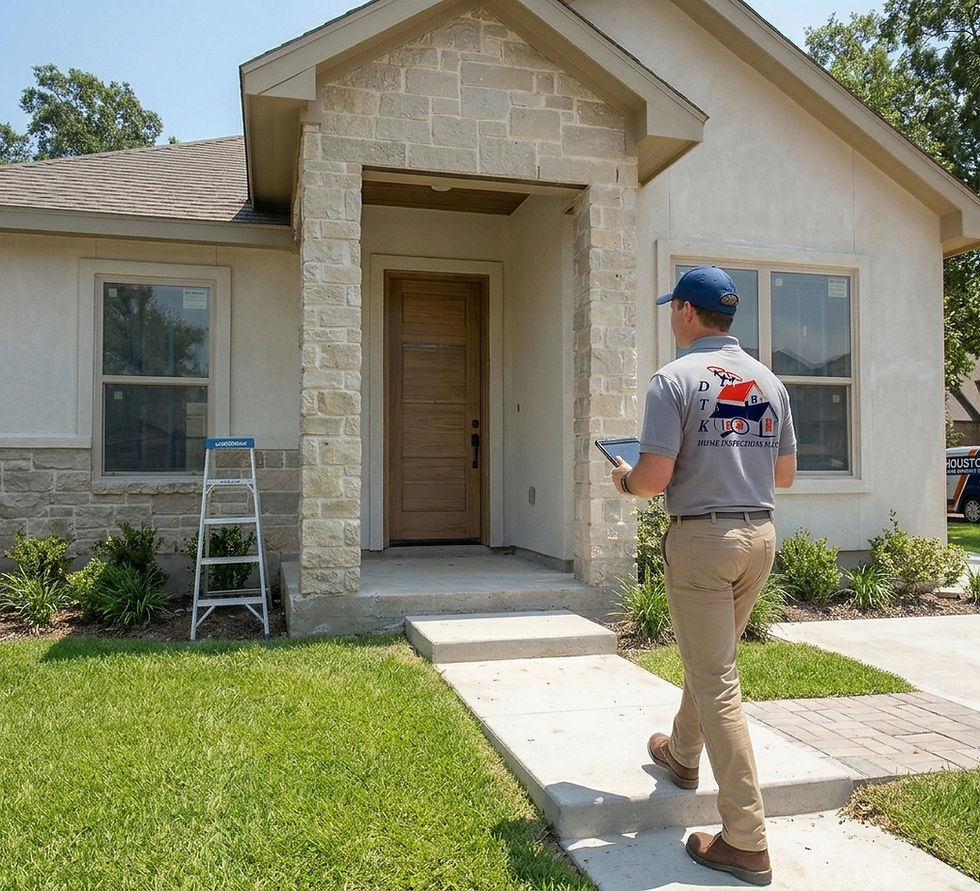
The Myth of the Perfect New Build: What Houston Home Inspectors Look For on Inspection Day
There is a common misconception among home buyers that "new" equals "flawless." It is easy to see why—walking through a freshly constructed home in the Greater Houston area, everything smells new, looks pristine, and shines with modern finishes.
However, new construction homes are built by human beings working under tight production schedules, frequently navigating supply chain pressures and fluctuating subcontractor availability. Errors happen. In fact, professional home inspectors often find just as many deficiencies, structural oversights, and safety hazards in brand-new builds as they do in decades-old properties.
Because of Southeast Texas’s unique climate, geography, and soil conditions, a local home inspection requires a specialized eye. Here is what top home inspectors in the Houston market look for when evaluating a new construction home.
1. The Foundation and Expansive Texas Clay
Houston sits on expansive clay soil, which dramatically expands when wet and shrinks when dry. Combine this with the region's intense downpours and humid periods, and you have a recipe for severe structural stress.
What inspectors watch for: While you cannot see the reinforcing rebar or post-tension cables inside a poured slab, inspectors evaluate the perimeter of the foundation for corner pops, honeycombing, or early settlement cracks. They also examine the levelness of the subfloor using localized altimeters or specialized levels to ensure the home hasn’t started shifting unevenly before the keys are even handed over.
2. Grading and Drainage Management
Because Houston is notorious for flash flooding and flat topography, grading is arguably one of the most critical exterior components of a new home.
What inspectors watch for: Builders must grade the lot so that water flows away from the foundation walls. Inspectors actively seek out flat spots or negative grading where water can pool against the slab. They also check that there are swales in place to help move the water, and that the foundation reveals sufficient clearance from the ground (usually 4 to 6 inches) between the soil and the top edge of concrete.
3. The Attics and Thermal Envelopes
In the punishing Houston heat, an improperly installed HVAC system or poor insulation layout will instantly skyrocket utility bills. It can also cause premature equipment failure and mold growth.
What inspectors watch for: Inspectors enter into the attic spaces to verify that insulation depth meets modern energy codes uniformly, without bare patches or thin areas throughout the attic. They pay meticulous attention to the HVAC ductwork layout, looking for kinks, constricted lines, or poorly sealed plenums that leak expensive, conditioned air into the attic.
4. Siding, Flashing, and Moisture Barriers
Driving rain and high humidity mean a home’s exterior envelope must be completely watertight.
What inspectors watch for: Inspectors examine the intersections where different building materials meet—such as where the roofline intersects an exterior wall. They check for kick-out flashing's to divert water away from walls. They also inspect windows and doors to see if they have been flashed and caulked to stop trapped water intrusion.
5. Unfinished Trades and Missing Hardware
As subcontractors rush to meet builder deadlines, minor components frequently get overlooked or omitted entirely.
What inspectors watch for: It is remarkably common to find missing attic structural hardware like truss hangers, hurricane straps, or proper structural screws. Inspectors also regularly flag ungrounded electrical outlets, missing cover plates, plumbing vents that terminate inside the attic rather than out through the roof, or expansion joints that were never sealed.
The Bottom Line
Buying a new construction home is an incredible milestone, but assuming the city code inspectors caught everything is a dangerous gamble. Standard municipal inspections are brief and high-level. A dedicated independent third-party home inspection ensures that hidden shortcuts do not become costly, out-of-pocket repairs down the road.
Before signing those final closing documents, bring out a licensed Home Inspector to verify that your dream home was built properly and built to last.
Ready to Book?
If you're under contract on a home in the Houston area, don't wait. Inspection timelines in this market are tight, and getting on the schedule early gives you room to act on what you find.
Schedule online in a few minutes at dtkhomeinspections.com/schedule-now, or give me a call at (346) 581-7664.
You deserve to feel confident about one of the biggest purchases of your life. That's what I'm here for.
Derek Myhand, DTK Home Inspections, InterNACHI® Certified Professional Inspector | TREC License #26263, serving Houston and surrounding areas.


Comments